Pokrovsk, a mining and railway city in Ukraine's Donetsk region with a prewar population of about 60,000, became one of the longest and bloodiest battles of the Russia-Ukraine war. For Ukraine it was a supply hub: roads and rail lines through the city fed troops across the eastern front, and nearby sat the country's only mine producing coking coal for steelmaking. For Russia it was the gateway to the last big Ukrainian-held cities in Donetsk.
After almost two years of fighting, Russia claimed the city on Dec. 1, 2025. The Institute for the Study of War (ISW), a Washington think tank that tracks the front line, later assessed that Russian forces completed the capture in early February 2026.
At a glance
- Where: Pokrovsk, Donetsk Oblast, eastern Ukraine, on the main routes west toward the Dnipropetrovsk region.
- Why it mattered: A road, rail and supply hub for Ukrainian forces, and home to Ukraine's last coking-coal mine.
- Outcome: Russia claimed the city on Dec. 1, 2025. ISW last saw Ukrainian troops operating inside it on Jan. 28, 2026, and assessed that Russia controlled all of it by early February. Ukraine never formally announced a withdrawal.
- Since then: Russia has made little progress west of the city, and fighting continues on the surrounding front.
Timeline
August 2024 — Residents flee as the front approaches
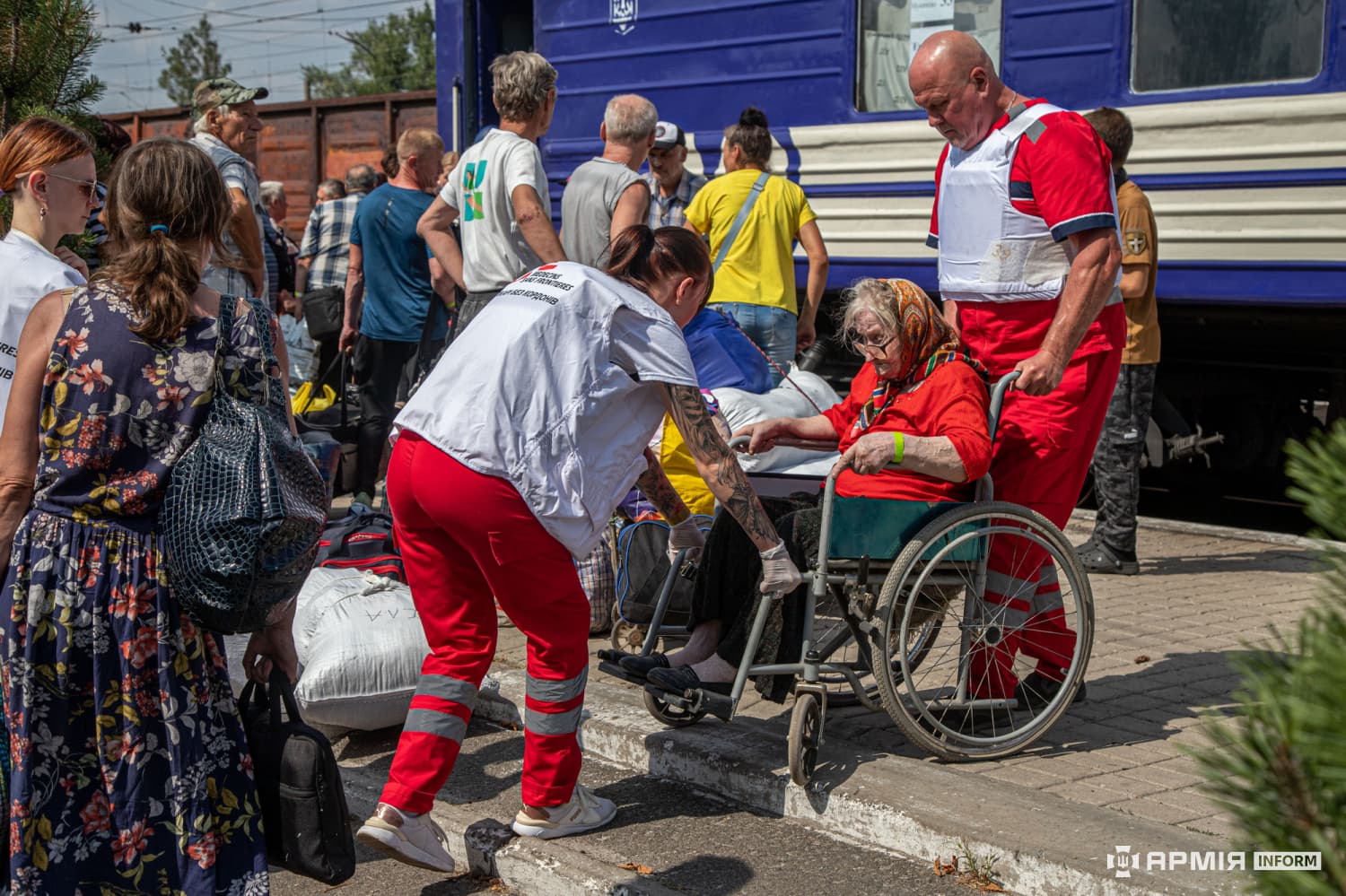
Russian forces pushed west toward Pokrovsk through the summer of 2024, and residents began leaving by train and bus. Analysts at the time described the city as a key road and rail distribution point for Ukrainian forces across a broad stretch of the front (Reuters, via Malay Mail).
December 13, 2024 — Ukraine replaces its Donetsk commander
As Russian troops advanced at their fastest pace since 2022 and got within a few kilometers of the city, Ukraine removed Brig. Gen. Oleksandr Lutsenko as commander of its Donetsk operational group and replaced him with Brig. Gen. Oleksandr Tarnavskyi. The Financial Times first reported the change; Lutsenko had been criticized by Ukrainian lawmakers and military bloggers for failing to slow the advance (Ukrainska Pravda; CNN, via KEYT). Ukraine's commander-in-chief, Oleksandr Syrskyi, said Russian forces had the advantage "primarily in manpower."
December 2024 – January 2025 — The coking-coal mine shuts
Metinvest, Ukraine's biggest steelmaker, halted the shaft closest to the fighting in December (Euromaidan Press) and stopped production at the whole mine in January 2025, citing the approaching front, power shortages and the risk to its workers (Reuters, via Mining.com). The loss forced Ukraine's steel industry to rely on imported coal.
Spring 2025 — Russia's assault stalls
Instead of storming the city, Russian forces tried to work around it from the south. Syrskyi said in April that Ukrainian troops had retaken about 16 square kilometers near the villages of Udachne, Kotlyne and Shevchenko (Euromaidan Press), and Ukrainian commentators began describing the Russian push as a failure. British defense intelligence agreed that Pokrovsk was still Russia's priority but said its forces had made no notable advances around the city since late 2024 (Ukrainska Pravda).
August 2025 — A breakthrough to the northeast
Russian troops punched through a thinly held section of the front near Dobropillia, northeast of Pokrovsk, advancing roughly 10 to 15 kilometers in a few days and threatening the city's supply roads (Euromaidan Press). Ukraine rushed in reserves, contained the salient and said it had cleared Russian infiltrators from Pokrovsk itself (Euromaidan Press). The episode showed Russia's new approach: small infantry groups slipping through gaps while drones hit vehicles on the roads in and out of the city.
November 2025 — Fighting moves into the city
By early November, Russian and Ukrainian soldiers were fighting in the ruins of Pokrovsk itself. Russia said it had surrounded the city, while Ukraine denied an encirclement (Reuters, via Hawaii Tribune-Herald). Russia's Defense Ministry called on the remaining Ukrainian troops to surrender (Novaya Gazeta Europe).
December 1, 2025 — Moscow claims the city
Russia's military announced it had captured Pokrovsk, a claim that came just ahead of talks with U.S. envoy Steve Witkoff. Kyiv dismissed it (CNN). Ukraine acknowledged pulling back from some positions around Pokrovsk and neighboring Myrnohrad to avoid being cut off, but in mid-December Syrskyi said Ukrainian troops held about 16 square kilometers in the north of the city (Ukrainska Pravda).
December 28, 2025 — Russia claims Myrnohrad
Russia said it had taken Myrnohrad, Pokrovsk's twin town to the east, though ISW found fighting there continued for roughly another month.
Early February 2026 — The city falls
ISW last observed Ukrainian forces operating in Pokrovsk on Jan. 28, 2026. In its Feb. 25 assessment, it concluded that Russia had seized the entire city in the preceding weeks — ending a campaign that began in early 2024 (ISW).
Where things stand now
As of October 2026, Russia holds what is left of Pokrovsk, but the capture has not produced the breakthrough Moscow wanted. ISW reported that Russian forces had made no operationally significant advances west or northwest of the city since December 2025 and had not taken Hryshyne, a village about 2 kilometers to the northwest (ISW; The New Voice of Ukraine).
Fighting continues on what Ukraine's General Staff still calls the Pokrovsk direction. In late September 2026 it reported 20 to 29 Russian attacks a day there, and a Ukrainian marine brigade said it had cleared about 5 square kilometers in a local counterattack (Euromaidan Press). Russia's other main focus in Donetsk is Kostiantynivka, on the approach to Kramatorsk and Sloviansk, the two largest Ukrainian-held cities left in the region.
Why Pokrovsk mattered
- Logistics. The city sat on the roads and rail lines that supplied Ukrainian positions across Donetsk. Once Russian drones and artillery could hit those routes, holding the city became steadily harder.
- Industry. Losing the coking-coal mine cut Ukrainian steelmaking — one of the country's main exports before the war — off from its domestic coal supply.
- Manpower. The battle exposed Ukraine's shortage of infantry. Commanders told the Financial Times in late 2024 that they were sometimes outnumbered by as much as eight to one.
- Cost and time. Like Bakhmut and Avdiivka before it, Pokrovsk took Russia many months and heavy losses to capture, and left a ruined city behind.
For the diplomacy around the war — ceasefire talks, sanctions and the role of the United States — see our timeline of the Russia-Ukraine war and peace talks.
Sources
- Institute for the Study of War, Russian Offensive Campaign Assessment, Feb. 25, 2026
- CNN, Russia claims to have captured key city of Pokrovsk (Dec. 1, 2025)
- Ukrainska Pravda, Ukrainian forces regain control in northern part of Pokrovsk (Dec. 17, 2025)
- Reuters, Russian and Ukrainian troops battle in ruins of Pokrovsk (Nov. 5, 2025)
- Reuters, Ukraine halts production at Pokrovsk coal mine as Russia closes in (January 2025)
- Euromaidan Press, Ukraine makes local gains on Pokrovsk front (Sept. 28, 2026)