Since returning to office in January 2025, President Donald Trump has used tariffs more aggressively than any president in nearly a century. He hit almost every trading partner with new import taxes, escalated a trade war with China to tariffs above 100%, and struck a series of deals that set 15% as the new normal for close allies.
In February 2026 the Supreme Court ruled that the emergency law behind most of those tariffs did not allow them. The administration replaced them within days, first with a temporary global tariff and then, in July 2026, with new tariffs under a different law. Importers are now getting back about $166 billion in duties the court said were never lawful.
The key numbers
- Average effective tariff rate: 7.1% in August 2026, up from 2.3% in January 2025, measured by duties actually collected (Penn Wharton Budget Model).
- Revenue: $314.8 billion in gross customs revenue from the new tariffs between January 2025 and August 2026, before refunds.
- Refunds: About $166 billion was collected under the emergency tariffs the Supreme Court struck down. By Oct. 2, 2026, U.S. Customs and Border Protection had certified about $126 billion in refunds, including interest.
- Highest rates still in place: 50% on steel and aluminum, under a national-security law the ruling did not touch.
Timeline
February–March 2025 — The opening shots
Trump invoked the International Emergency Economic Powers Act (IEEPA) to put tariffs on Canada, Mexico and China, citing fentanyl and migration, and imposed 25% tariffs on imported steel and aluminum in March. The European Union, Canada and China began preparing retaliation.
April 2, 2025 — "Liberation Day"
In a Rose Garden ceremony, Trump announced a 10% tariff on nearly all imports plus higher "reciprocal" rates on dozens of countries — 20% on the EU, 24% on Japan, 34% on China and 46% on Vietnam, among others. South Korea's acting president ordered emergency support for exporters facing a 25% rate (Reuters, via Yahoo News). Stocks plunged, but Treasury Secretary Scott Bessent and Commerce Secretary Howard Lutnick said the tariffs would go ahead as planned.
April 9, 2025 — A pause for most, escalation with China
As bond markets wobbled, Trump paused the higher reciprocal rates for 90 days, leaving the 10% baseline in place — except for China. Beijing and Washington raised tariffs on each other in rapid succession until U.S. duties on Chinese goods reached 145% and China's reached 125% (States Newsroom, via Missouri Independent). The next day, the EU suspended its own retaliation against U.S. steel tariffs — a package covering about €21 billion of American goods, from which bourbon and wine had been dropped after lobbying by France, Italy and Ireland (EY).
April 2025 — Companies scramble
- Nintendo delayed U.S. preorders for the Switch 2 "to assess the potential impact of tariffs," then opened them on April 24 at the original $449.99 price while raising prices on some accessories (CNBC, via NBC New York).
- Apple was reported by the Financial Times to be planning to assemble all iPhones sold in the U.S. — more than 60 million a year — in India by the end of 2026, to reduce its exposure to China (iPhone in Canada).
- Pegatron, a major Apple supplier, warned that U.S. store shelves could look like "those in third-world countries" within two months (The Standard).
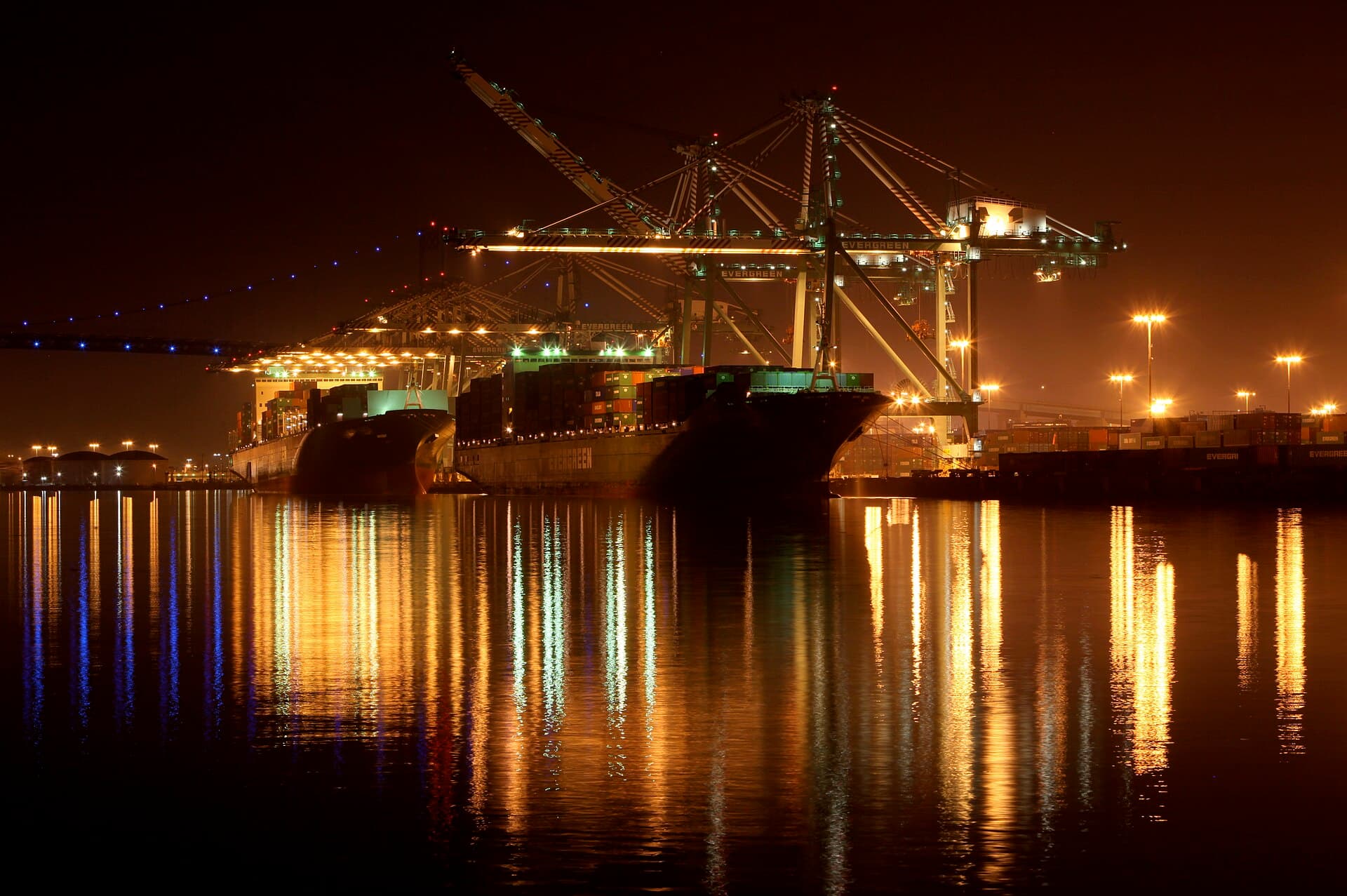
- Shipping slumped: the Port of Los Angeles forecast that arrivals in early May would be down about a third from a year earlier, the Financial Times reported.
- Port fees: The U.S. Trade Representative announced fees on Chinese-built and Chinese-owned ships docking at U.S. ports, starting at $50 per net ton in October 2025 and rising each year, to revive American shipbuilding (Philstar, via AFP).
May 2, 2025 — The end of duty-free packages from China
The "de minimis" exemption that let packages worth under $800 enter duty-free ended for China and Hong Kong. Shein and Temu raised prices ahead of the change, and Temu began adding "import charges" that sometimes exceeded the price of the item (CBS News). The exemption ended for all countries in August.
May 8, 2025 — A framework with Britain
The U.S. and U.K. announced the first deal of the trade war: the 10% baseline stayed, but British cars got a lower 10% rate on up to 100,000 vehicles a year, and the U.K. opened its market to U.S. ethanol and some farm goods (EY). Earlier reports that U.S. officials wanted Britain to loosen its hate-speech laws as part of the talks did not result in any such provision.
May 12, 2025 — A truce in Geneva
After talks in Switzerland, the U.S. cut its tariffs on Chinese goods from 145% to 30% and China cut its tariffs from 125% to 10% for 90 days. The truce was later extended.
June–July 2025 — Steel doubles, and the 15% deals
Tariffs on steel and aluminum rose to 50% in June. In July the EU agreed to a framework with a 15% tariff on most of its exports, struck at Trump's golf resort in Turnberry, Scotland (Al Jazeera); Japan and South Korea agreed to similar 15% deals.
August 2025 — Brazil, Switzerland and India
New country-specific rates took effect, including 50% on many Brazilian goods, a penalty Trump tied to the prosecution of former President Jair Bolsonaro, 39% on Switzerland and, by the end of the month, 50% on India, which included a penalty for buying Russian oil. Brazil's coffee exporters, who normally ship about 8 million bags a year to the U.S., looked elsewhere: China approved 183 more Brazilian coffee companies to export to its market (Reuters, via The Citizen). On Aug. 29 a federal appeals court ruled most of the IEEPA tariffs illegal but left them in place while the Supreme Court heard the case.
September–October 2025 — Soybeans, chips and pasta
- Soybeans: China, normally the biggest buyer of U.S. soybeans, stopped buying during the trade fight, hitting farmers in the Midwest; Trump promised to use tariff revenue to help them.
- Chips: China's market regulator said in September that a preliminary investigation, opened in December 2024, had found Nvidia violated antimonopoly law in connection with its 2020 purchase of Mellanox (Jurist).
- Pasta: The Commerce Department preliminarily set antidumping duties of more than 91% on Italian pasta makers led by Garofalo, which on top of the 15% tariff threatened combined rates of about 107%. In March 2026, final results cut the rates to between 2.65% and 7% (Italian Ministry of Foreign Affairs; The Local Italy).
October 30, 2025 — The Busan truce
Meeting in Busan, South Korea, Trump and Chinese leader Xi Jinping agreed to a one-year truce. The U.S. lowered tariffs on Chinese goods by about 10 percentage points, to roughly 47%; China paused sweeping new export controls on rare earths and agreed to buy 12 million metric tons of U.S. soybeans by the end of 2025 and 25 million tons a year from 2026 through 2028 (Axios; China Briefing).
November 2025 — The affordability retreat
With grocery prices a political liability, Trump removed tariffs on beef, coffee, bananas, cocoa, spices and other foods (NPR) and later lifted the 40% penalty tariffs on Brazilian food products (Scripps, via KGUN). Switzerland won a cut from 39% to 15% after Swiss business leaders visited the Oval Office — bearing gifts that included a gold bar and a Rolex — and pledged $200 billion of investment in the U.S. (AFP, via Ada Derana; National Jeweler).
February 20, 2026 — The Supreme Court strikes down the emergency tariffs
In Learning Resources v. Trump, the court ruled 6–3 that IEEPA does not give the president power to impose tariffs, invalidating the fentanyl and reciprocal tariffs. Chief Justice John Roberts wrote the majority opinion (Cornell Legal Information Institute). Tariffs imposed under other laws — on steel, aluminum, autos and other goods deemed national-security risks — were not affected.
February 24, 2026 — A 150-day stopgap
The administration replaced the struck-down duties with a 10% global tariff under Section 122 of the Trade Act of 1974, which allows temporary tariffs for up to 150 days. Goods covered by the U.S.-Mexico-Canada Agreement and products already facing national-security tariffs were exempt (Global Trade Alert).
March–April 2026 — Refunds
The Court of International Trade ordered the government to refund IEEPA duties, including to importers that had not sued (Orrick). Customs opened a refund system in April.
May 14–15, 2026 — Trump in Beijing
At a summit in Beijing, China agreed to buy 200 Boeing jets and resume some U.S. beef and poultry imports, and the two sides set up new boards on trade and investment. They did not extend the truce or settle disputes over rare earths and chip export controls (China Briefing).
July 24, 2026 — New tariffs replace the stopgap
When the Section 122 tariff expired, new tariffs under Section 301 of the Trade Act took effect the same minute: 10% or 12.5% on products from about 60 economies, with no built-in end date. Brazil faces a separate 25% Section 301 tariff that began July 22. A legal challenge to the new duties was filed within days (Worldwide Logistics Group).
September 2026 — The China truce is extended
During Xi's visit to Washington, Bessent said the Busan truce would be extended by two months, from Nov. 10, 2026, to Jan. 10, 2027 (Honolulu Star-Advertiser).
Where things stand now
As of October 2026, no IEEPA tariffs remain. What's in effect:
- Section 301 tariffs of 10% or 12.5% on about 60 economies, plus older Section 301 tariffs on China and a 25% tariff on Brazil. The new duties face a court challenge.
- Section 232 national-security tariffs, including 50% on steel and aluminum and duties on autos and other products.
- China, at the highest effective rate of any major trading partner, about 24%, with a truce running to Jan. 10, 2027.
Refunds of the struck-down tariffs are about three-quarters complete. Trump and Xi are expected to meet again later this year at the Asia-Pacific Economic Cooperation summit in Shenzhen and the Group of 20 summit in Miami, where the future of the truce will be on the table (The Manila Times).
Sources
- Penn Wharton Budget Model, Effective tariff rates and revenues, updated Oct. 14, 2026
- Cornell Legal Information Institute, Learning Resources v. Trump (2026)
- Global Trade Alert, Section 122 in effect: what the US tariff regime looks like now
- China Briefing, The Xi-Trump Beijing summit: what was agreed — and what was not
- Axios, Trump cuts China tariffs after promises from Xi on rare earths, soybeans (Oct. 30, 2025)
- NPR, Trump scraps tariffs on beef, coffee, tropical fruit (Nov. 14, 2025)