At about 7:47 a.m. on Oct. 10, 2025, a production building at Accurate Energetic Systems, an explosives manufacturer in rural Middle Tennessee, blew up. All 16 employees working inside were killed. The U.S. Chemical Safety Board has called it "one of the deadliest industrial incidents in our country in years."
A year later, the state has issued the largest workplace-safety penalty in its history, victims' families are suing, and federal investigators have not yet said what caused the explosion.
Key facts
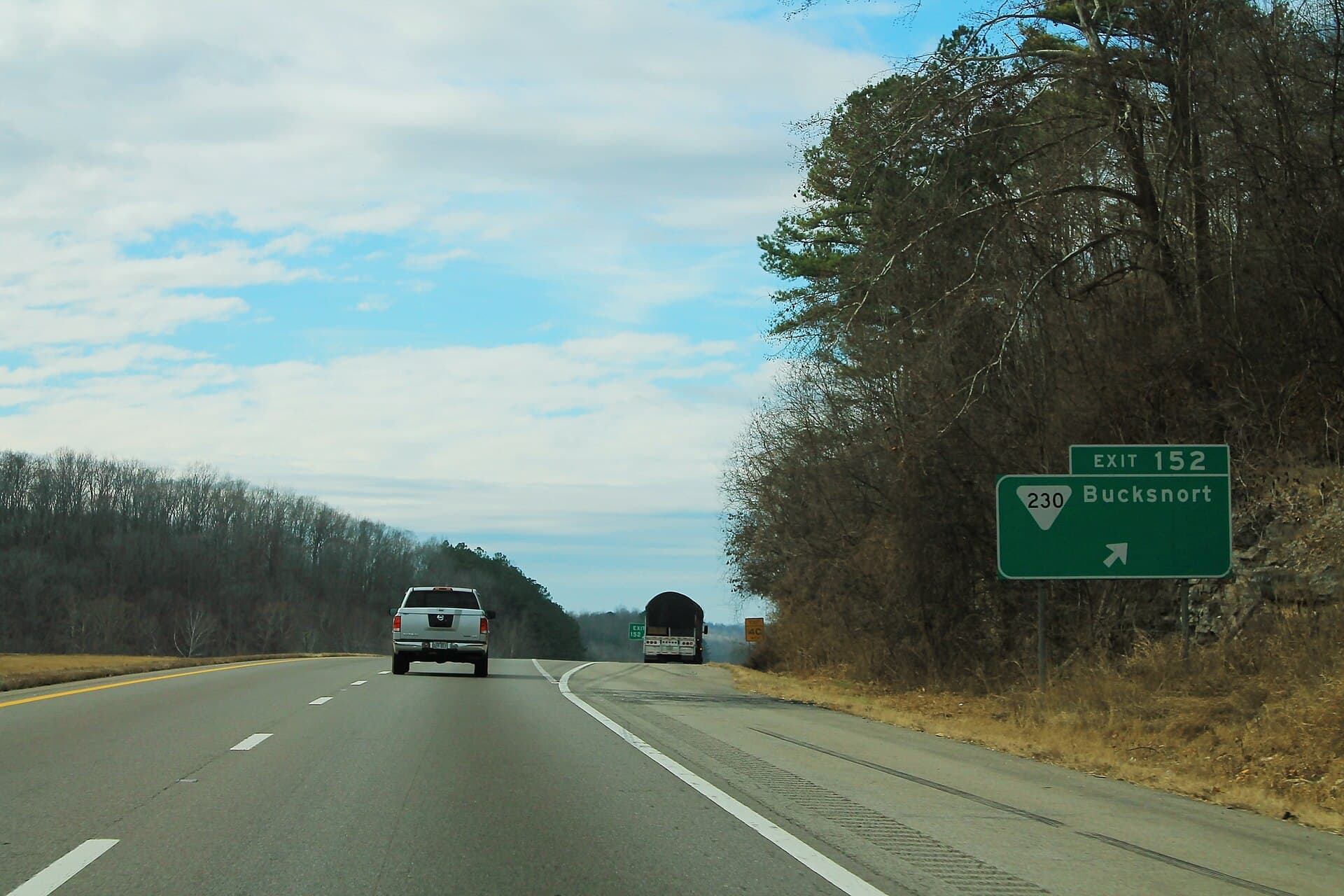
- Where: The Accurate Energetic Systems (AES) complex near Bucksnort, an unincorporated community about 60 miles southwest of Nashville. The site straddles the line between Hickman and Humphreys counties; the company's headquarters are in nearby McEwen.
- Who died: 16 employees, ages 21 to 60. Seven other people near the building were injured. In the first hours, as many as 19 people were reported missing.
- The company: AES employs about 150 people and makes explosives for the aerospace, defense, demolition and mining industries, with contracts mainly with the U.S. Army and Navy.
- What exploded: About 24,600 pounds of explosives were in the building, and the Chemical Safety Board estimates that about 23,000 pounds detonated, deflagrated or burned. Debris was thrown more than 700 feet, and the blast was reportedly felt more than 20 miles away.
Sources: AP, via Western Mass News; U.S. Chemical Safety Board.
Timeline
October 10, 2025 — The explosion
The blast destroyed Building 602, where workers were making cast boosters — explosive charges, typically a mixture of TNT and RDX, that are hand-poured into tubes and used to set off larger blasts in mining. Authorities said there were no survivors from the building. The explosion registered as a magnitude 1.6 seismic event on U.S. Geological Survey instruments.
October 2025 — Identifying the victims
The Tennessee Bureau of Investigation used rapid DNA testing to identify the dead; by Oct. 24 it had identified 14 of the 16. The Bureau of Alcohol, Tobacco, Firearms and Explosives said its preliminary work showed the blast began on the first floor near kettles used to make an explosive mixture for the mining industry, and that other explosives stored nearby then detonated. After searching about 500 acres, investigators returned the site to the company. The first lawsuit was filed that month in state court on behalf of the 9-year-old daughter of Jeremy Moore, one of the workers killed (AP, via Western Mass News).
March 16, 2026 — The Chemical Safety Board's update
In its first public update, the CSB described how the building worked: explosives were melted in steam-heated kettles on a mezzanine, transferred to kettles on the ground floor and poured by hand. The building had nine kettles and no sprinkler or deluge fire-protection system. "The first detonation created a pressure wave that set off additional explosives throughout the building," said the lead investigator, Cruz Redman. The board said it was examining AES's production process, its safety management for explosives, the design of the kettles and the sensitivity of the materials, but it did not announce a cause (CSB).
April 7, 2026 — A record state penalty
After a six-month investigation, the Tennessee Occupational Safety and Health Administration (TOSHA) cited AES for 100 violations — 59 willful, 32 serious, four repeat-serious and five other-than-serious — and proposed penalties of $3,133,900. It was the largest investigation and the highest total penalty in the agency's history; the previous record was about $380,000, after a 2001 explosion at a military flare plant. The citations included failing to make sure that employees working around explosives "received and understood the training required." TOSHA said its job was to determine whether rules were broken, not to establish the cause of the blast. AES's chief executive, Wendell Stinson, said, "We believe that TOSHA's findings do not represent the standard of safety we strive to achieve every day" (Fox 17, via WJLA).
April–October 2026 — Families go to court
Relatives of several victims filed wrongful-death suits in Humphreys County Circuit Court against AES, a related real estate company and the company's owners. AES asked the court to dismiss the cases, arguing that Tennessee's workers' compensation law bars such claims. In October 2026, a judge denied that motion, allowing the cases to proceed (WSMV).
Where things stand now
On the first anniversary of the explosion, families told WSMV that they had heard nothing from federal investigators about the cause. The ATF has not released findings, and the CSB investigation is continuing. According to WSMV, AES resumed operations within days of the blast and is still manufacturing explosives at the site. "Justice for us would be AES shut down, not operating anymore," said Ernest Mays, a member of one victim's family.
Sources
- U.S. Chemical Safety Board, Investigation update on fatal October 2025 explosions at Accurate Energetic Systems (March 16, 2026)
- AP, What to know about the blast at a Tennessee explosives plant that killed 16 people (Oct. 24, 2025)
- Fox 17, via WJLA, 100 violations, $3.1M fine issued in Tennessee plant blast that killed 16 (April 7, 2026)
- WSMV, 'We've heard nothing': A year after 16 died at AES, TN families say the silence is the hardest part (Oct. 12, 2026)