Elon Musk began 2025 as the most powerful private citizen in Washington, running the Department of Government Efficiency (DOGE) from inside the White House. By the end of it he had left government, fallen out with President Donald Trump, and was restructuring his companies around artificial intelligence. In 2026, SpaceX absorbed his AI startup xAI — which already owned X — and went public in a record-breaking offering.
Timeline
December 2024 — xAI raises $6 billion
Musk's AI company, xAI, raised $6 billion from investors including Andreessen Horowitz, BlackRock, Fidelity, Nvidia and Saudi Arabia's Kingdom Holding, nearly doubling its valuation to about $45 billion.
January–May 2025 — DOGE
Musk led DOGE's push to cut federal spending and staff, dismantling agencies such as the U.S. Agency for International Development. His companies' footprint in government grew too: Starlink, SpaceX's satellite internet service, was installed across the White House complex.
March 28, 2025 — xAI buys X
Musk announced that xAI had acquired X, the social network formerly known as Twitter, in an all-stock deal valuing xAI at $80 billion and X at $33 billion. "xAI and X's futures are intertwined," he wrote.
April 1, 2025 — A loss in Wisconsin
Musk and groups he backed spent more than $20 million to help a conservative candidate win a seat on Wisconsin's Supreme Court. The liberal candidate, Susan Crawford, won by about 10 points, a rebuke widely read as a verdict on Musk's role in government.
May–June 2025 — Out of government, and a feud
X's monthly users in the European Union fell to about 94.8 million, roughly 11 million fewer than five months earlier and below their level before Musk bought the company, according to the platform's own EU transparency report. At the end of May, Musk left his government role. Days later, he and Trump fell out spectacularly in public over Trump's tax-and-spending bill.
October 2025 — Fighting NASA over the moon lander
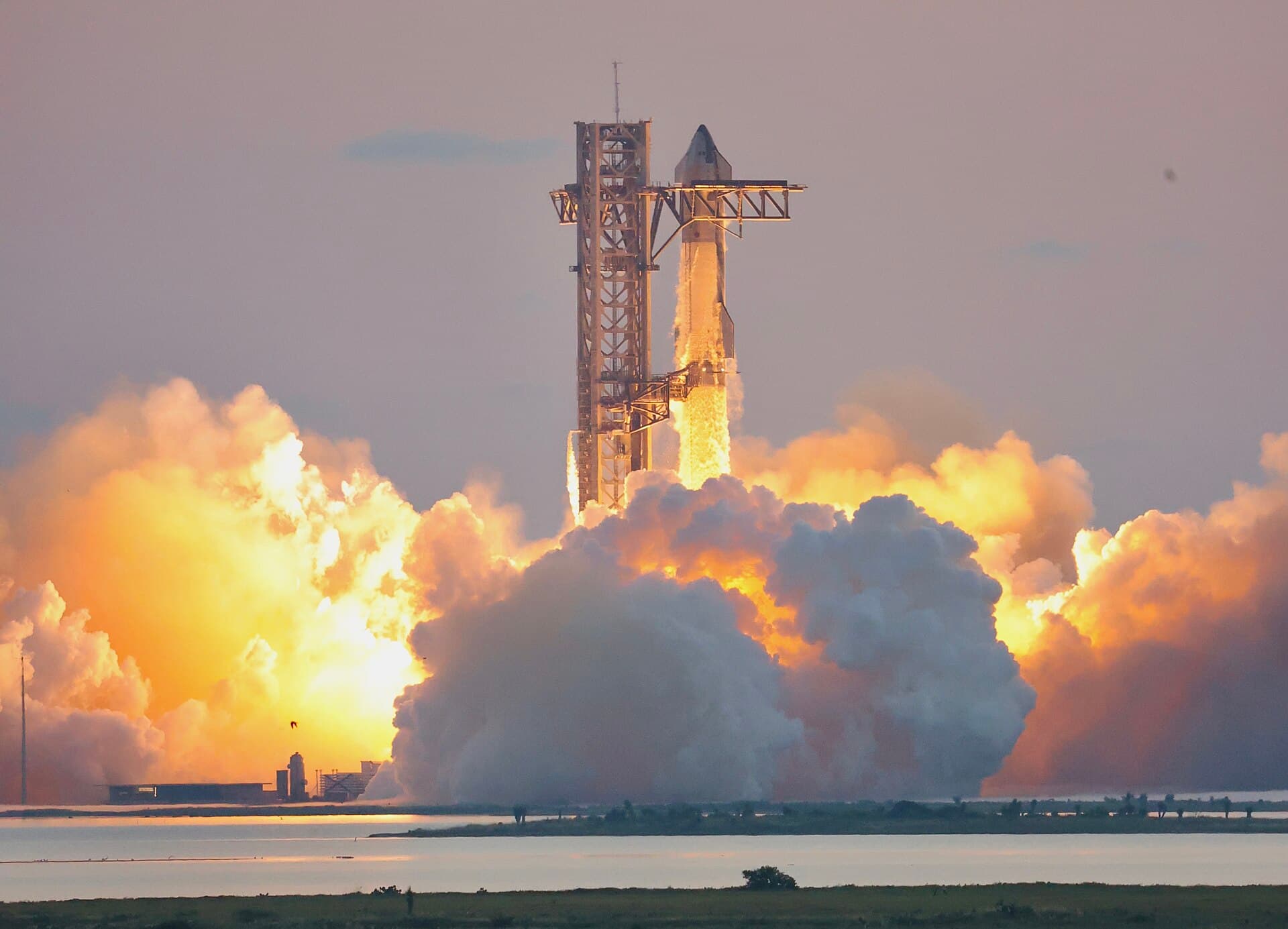
When acting NASA Administrator Sean Duffy said the agency would reopen the contract for the Artemis III moon lander because SpaceX's Starship was behind schedule, Musk insulted him online. SpaceX then said it was developing a "simplified" approach to the lander. In early 2026, NASA Administrator Jared Isaacman redefined Artemis III as a 2027 test in Earth orbit, with the first crewed landing moved to Artemis IV in 2028 (The Register; Astronomy).
December 5, 2025 — Europe fines X
The European Commission fined X €120 million — its first penalty under the Digital Services Act — finding that its paid blue checkmarks deceived users about who was verified, and that X failed to provide required ad transparency and researcher access to data (WAM).
February 2, 2026 — SpaceX absorbs xAI
SpaceX acquired xAI, and with it X, in an all-stock deal valuing the combined company at about $1.25 trillion (CNBC; Bloomberg).
June 2026 — The biggest IPO ever
SpaceX raised $75 billion in its initial public offering, pricing shares at $135 — the largest IPO on record (NPR).
Where things stand now
Musk's empire is now organized around two public companies: Tesla, whose shareholders approved a pay package in November 2025 that could be worth up to $1 trillion if he hits ambitious targets, and SpaceX, which owns his rocket, satellite, AI and social media businesses. Starship remains central to both SpaceX's business and NASA's plans to return astronauts to the moon.
Sources
- NPR, SpaceX blasts off with a record-breaking $75 billion IPO (June 11, 2026)
- CNBC, Elon Musk's SpaceX acquiring AI startup xAI ahead of potential IPO (Feb. 2, 2026)
- WAM, EU fines X €120 million under Digital Services Act (December 2025)
- The Register, Starship may act as NASA's lunar taxi (March 2026)