

U.S. Prepares to Deport Iranian and Other Asylum Seekers to the Central African Republic
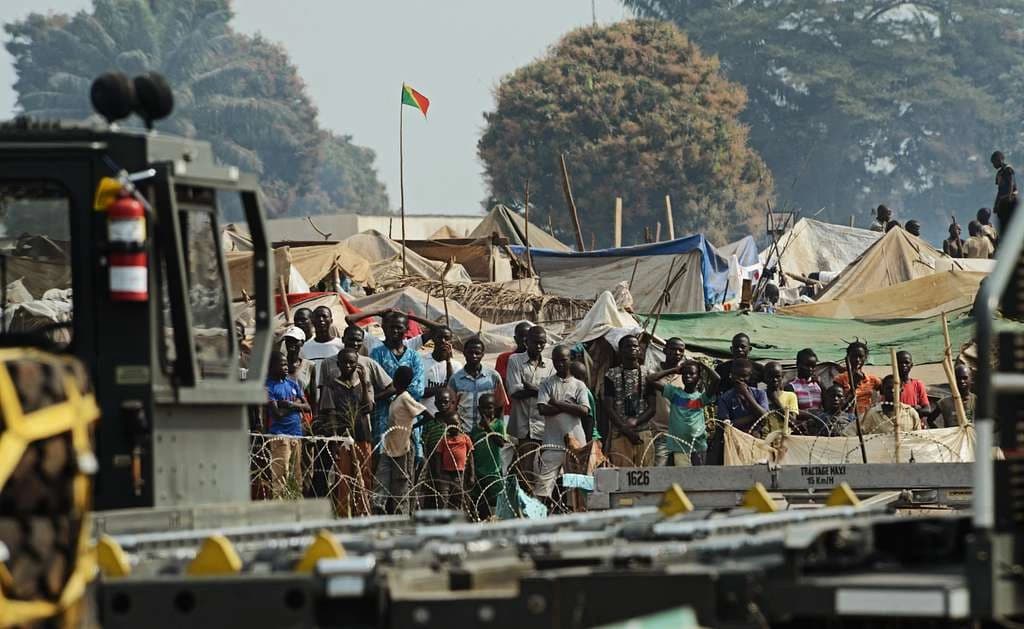
The U.S. government is preparing to deport a group of migrants—including individuals from Iran, Syria, and Afghanistan—to the Central African Republic (CAR). According to legal representatives and an official familiar with the plan, the CAR, a nation historically troubled by poverty and conflict, has agreed to accept these individuals under a third-country deportation arrangement.
The initial flight, which could depart as early as Thursday, is expected to carry roughly 20 people. Among the passengers are two Iranian women who, according to their attorney Emily Trostle, face severe risks if returned to Iran. One woman is a Christian convert, and the other is a pro-democracy advocate. Both were detained upon arriving in the U.S. in November 2024.
Trostle stated that a U.S. immigration judge had previously granted both women a protective status known as "withholding of removal." This status is awarded when a judge determines there is a greater than 50% chance an individual will face persecution or torture in their home country. Additionally, an anonymous lawyer indicated that a Turkish national fleeing political persecution, who also holds this protective status, may be on the flight.
This operation is part of a broader strategy by the Trump administration to utilize third-country agreements to relocate migrants who cannot legally be sent back to their nations of origin. A similar arrangement was previously established with the Democratic Republic of Congo.
While Washington maintains that these agreements are entirely lawful, human rights advocates argue that the details remain dangerously opaque and often lead to migrants ultimately being sent back to unsafe conditions. The U.S. Department of Homeland Security recently stated that all deported individuals receive full due process.
The planned deportations arrive against the backdrop of an ongoing, three-month war that began with heavy U.S. and Israeli military strikes on Iran in late February. In April, President Trump expressed that he supported the idea of the Iranian people rising against their government, though he acknowledged the extreme danger involved.
Ali Rahnama, the interim legal director for the Iranian American Legal Defense Fund, criticized the current deportation plan in light of those comments. "At the very moment the United States is promising the Iranian people freedom and support for standing against the Islamic Republic, it is sending Iranian asylum seekers who fled that same regime back toward their demise," Rahnama said.
Upon arriving in Bangui, the capital of CAR, the migrants will be housed in local apartments rather than facing immediate repatriation. Sources suggest that the scope of the agreement could eventually see hundreds of migrants relocated to the country.
The International Organization for Migration (IOM) confirmed it will offer voluntary humanitarian aid to the arrivals at the request of the CAR government. A spokesperson emphasized that the agency is not involved in the actual deportation process. Earlier this year, the U.S. allocated $85 million to the IOM for its operations within the Central African Republic.
The Central African Republic has struggled with persistent instability and violence since gaining independence from France in 1960, leaving the majority of its 5.5 million citizens in poverty. While President Faustin-Archange Touadera signed peace agreements with several rebel factions last year, the government continues to rely heavily on U.N. peacekeepers, Rwandan troops, and Russian mercenaries to maintain regional stability.