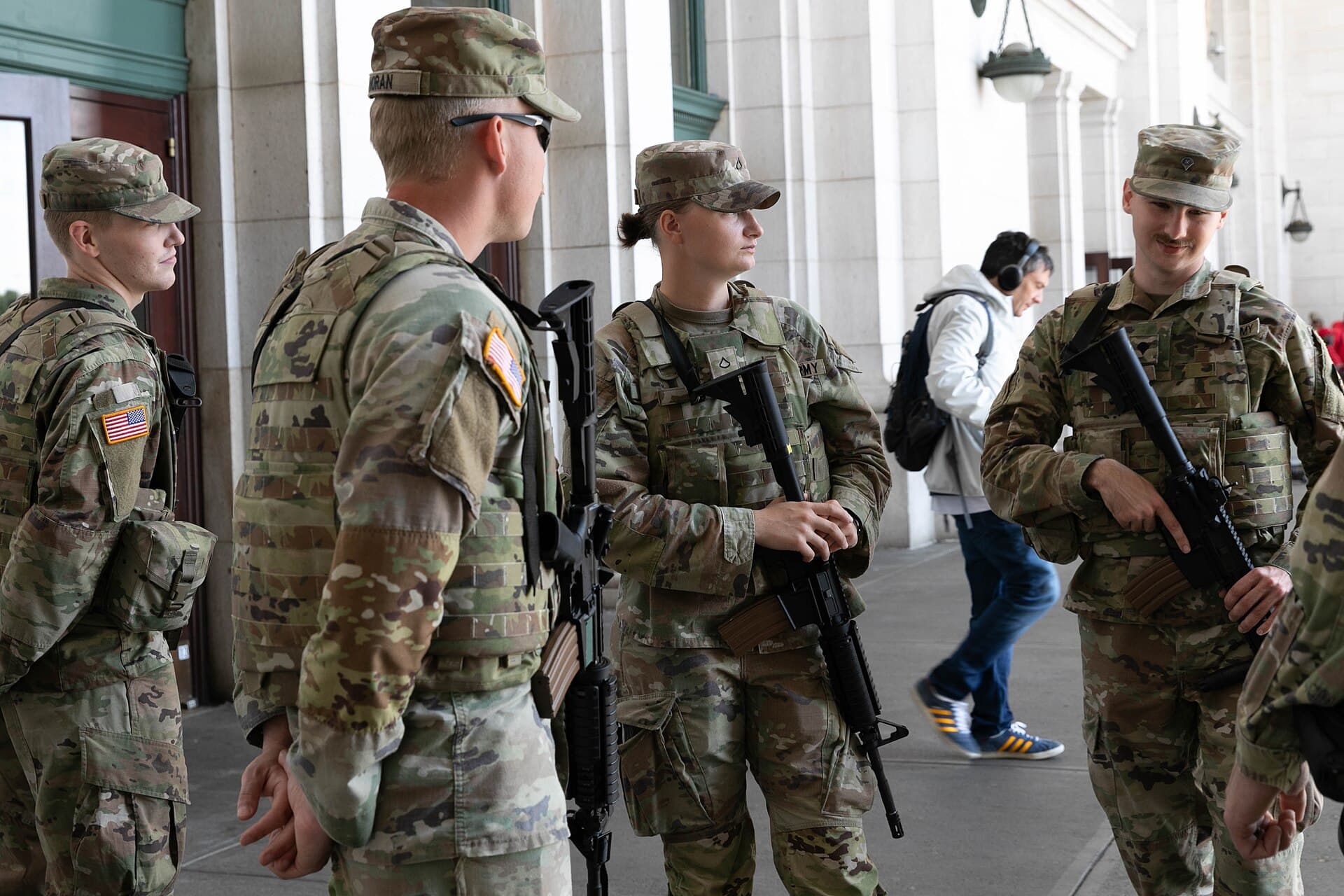
In 2025 President Donald Trump sent National Guard troops into Los Angeles, Washington, Memphis, Portland, Chicago and New Orleans. The administration said the troops were needed to fight crime and protect immigration officers from protesters. Democratic governors and mayors said there was no emergency and sued.
The courts mostly sided with the states. In December 2025 the Supreme Court refused, 6–3, to let Trump deploy troops in Illinois. A few days later he pulled federalized Guard members out of Illinois, Oregon and California, though he said they could return. Troops have stayed in Washington, D.C., where the president has more direct authority over the Guard.
At a glance
| City | Began | What happened |
|---|---|---|
| Los Angeles | June 2025 | About 4,000 California Guard troops and 700 Marines sent over Gov. Gavin Newsom's objections. A judge later ruled the deployment broke the Posse Comitatus Act. Control returned to California in January 2026. |
| Washington, D.C. | August 2025 | Grew from about 800 troops to about 4,700 by August 2026. A judge called it illegal, but an appeals court has let it continue. The mission is extended through 2026. |
| Memphis | October 2025 | Deployed with the support of Tennessee Gov. Bill Lee as part of a federal crime task force. Still under way as of August 2026. |
| Portland | Late September 2025 | Blocked by a federal judge before troops hit the streets, then barred by a permanent injunction. Remaining troops sent home in January 2026. |
| Chicago | October 2025 | About 500 Illinois and Texas Guard troops federalized but blocked from patrolling. The Supreme Court declined to intervene in December 2025. |
| New Orleans | December 2025 | Up to 350 troops patrolled tourist areas with state support. The deployment ended in August 2026. |
Timeline
June 2025 — Los Angeles
After protests against immigration raids, Trump federalized California National Guard troops and sent Marines to Los Angeles, the first time in decades a president had activated a state's Guard against its governor's wishes. California sued. On Sept. 2, U.S. District Judge Charles Breyer ruled that troops had carried out domestic law enforcement — setting up perimeters, blocking traffic and controlling crowds — in violation of the Posse Comitatus Act, and warned against creating "a national police force with the President as its chief" (Idaho Capital Sun).
August 11, 2025 — Washington, D.C.
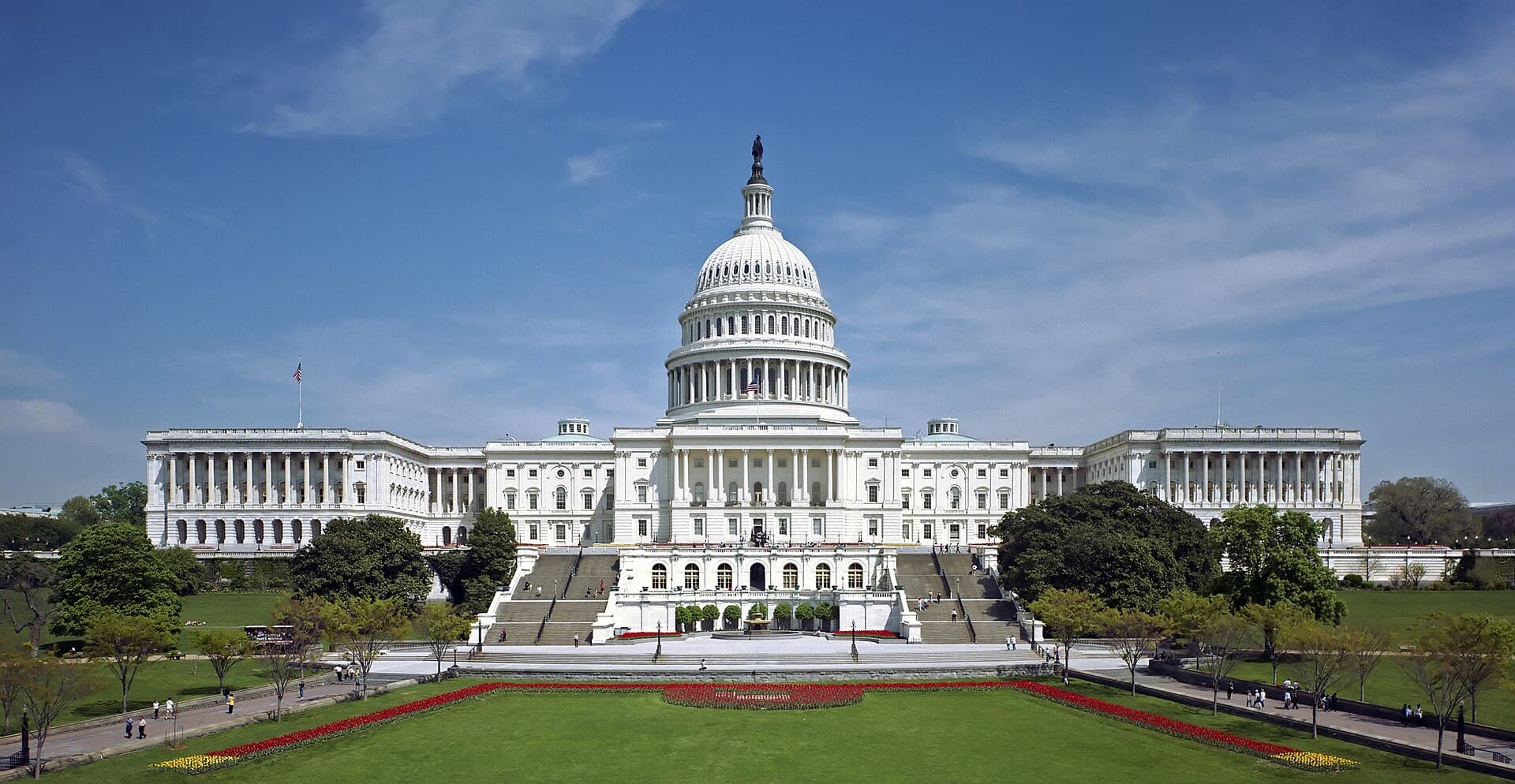
Trump declared a crime emergency in the capital, took temporary control of the city's police and sent in the D.C. National Guard, joined by troops from Republican-led states. Unlike in the states, the president commands the D.C. Guard directly.
Late September 2025 — "Training grounds" and Portland
In a Sept. 30 speech to senior commanders at Quantico, Virginia, Trump suggested using dangerous American cities as "training grounds" for the military. Days earlier he had ordered troops to Portland, Oregon, to protect an Immigration and Customs Enforcement building he described as under siege; Defense Secretary Pete Hegseth federalized 200 Oregon Guard members over Gov. Tina Kotek's objections.
October 4, 2025 — A Trump appointee blocks the Portland deployment
U.S. District Judge Karin Immergut, whom Trump appointed in his first term, issued a temporary restraining order, finding the president's justification "simply untethered to the facts" and writing that "this is a nation of Constitutional law, not martial law." When the administration tried to send California and Texas Guard troops to Oregon instead, she blocked that too (OPB).
October 5, 2025 — The Navy speech
At a Navy 250th-anniversary event in Norfolk, Virginia, Trump called Democrats "a little gnat" on his shoulder, prompting criticism that he was politicizing the military during a government shutdown. "Let's face it, this is a rally," he told the crowd (CNN, via KRDO).
October 2025 — Chicago and Memphis
The administration federalized about 300 Illinois Guard members and sent Texas troops to the Chicago area, where federal agents were conducting a large immigration operation. On Oct. 9, U.S. District Judge April Perry blocked the deployment, finding no evidence of a "danger of rebellion" in Illinois. Two days later an appeals court let the troops remain under federal control but barred them from patrolling. In Memphis, where the Republican governor welcomed the deployment, troops arrived as part of a federal task force; Shelby County officials sued the state (Tennessee Lookout).
October 17, 2025 — The case reaches the Supreme Court
The Justice Department asked the Supreme Court to let it deploy troops in Illinois, arguing they were needed to protect federal officers and property.
November 7, 2025 — Portland injunction made permanent
After a three-day trial, Immergut issued a permanent injunction barring Guard troops from any state from being deployed to Portland, ruling there was neither a rebellion nor a danger of one at the ICE facility (KLCC).
November 18–20, 2025 — "Punishable by death"
Six Democratic lawmakers who are veterans of the military or intelligence services, including Sens. Mark Kelly and Elissa Slotkin, released a video reminding troops they can refuse illegal orders. Trump called the video "SEDITIOUS BEHAVIOR, punishable by DEATH!" on Truth Social and said the lawmakers should be arrested and tried (ABC7). A few Republican senators, including Rand Paul and Thom Tillis, criticized the language; most stayed quiet.
November 20, 2025 — Judge rules D.C. deployment illegal
U.S. District Judge Jia Cobb found the deployment of more than 2,000 Guard troops in Washington unlawful, but paused her ruling to allow an appeal. In December a federal appeals court panel extended the pause while it considers the case (States Newsroom, via Louisiana Illuminator).
November 26, 2025 — Guard members shot near the White House
Two West Virginia Guard members on patrol were shot a few blocks from the White House. Army Spc. Sarah Beckstrom, 20, died of her wounds; the other soldier was critically injured. Police arrested an Afghan national. Trump ordered 500 more troops to the city (Christian Science Monitor).
December 23, 2025 — The Supreme Court rules
In a 6–3 unsigned order in Trump v. Illinois, the Supreme Court refused to lift the block on the Chicago deployment. The majority read the law Trump invoked — which lets a president federalize the Guard when he is "unable with the regular forces" to execute federal law — to refer to the regular military, which generally can't enforce laws domestically, and concluded the government hadn't shown that standard was met. Justices Clarence Thomas, Samuel Alito and Neil Gorsuch dissented (SCOTUSblog; CNN).
January 2026 — Troops go home, for now
Trump announced he was pausing the deployments in Oregon, Illinois and California, writing, "We will come back, perhaps in a much different and stronger form, when crime begins to soar again." Federalized troops were demobilized through Fort Bliss, Texas, and returned home in early January (OPB). An appeals court also ordered control of California's Guard returned to the state (KQED).
January–February 2026 — The fight over Sen. Kelly
Hegseth formally censured Kelly, a retired Navy captain, and opened a review that could cut his retirement rank and pay over the video (CBS News). Kelly sued, and in February U.S. District Judge Richard Leon blocked the Pentagon's action, writing that the defendants had "trampled on Senator Kelly's First Amendment freedoms" (NPR).
The legal fight, explained
- Federalizing the Guard. Governors normally command their state's National Guard. A federal law, known as Section 12406, lets the president take control in cases of invasion, rebellion, or when he can't execute federal law with "the regular forces." The Supreme Court's December ruling read that last condition narrowly.
- The Posse Comitatus Act. This 1878 law bars the military from acting as a domestic police force unless Congress authorizes it. Judge Breyer found troops in Los Angeles crossed that line.
- The Insurrection Act. Trump has repeatedly said he could invoke this law, which gives the president broader power to use troops domestically. The 2025 deployments relied on Section 12406 instead.
- Washington is different. Because D.C. is not a state, the president commands its Guard directly, which is why the capital deployment has outlasted the others.
Where things stand now
As of October 2026, Guard troops are still patrolling Washington. The deployment has grown from about 800 troops at the start to about 4,700, boosted by a summer surge for the America 250 celebrations, and the mission has been extended through the end of the year (NPR, via WYSU; Task & Purpose). Judge Cobb's ruling remains on hold: an appeals court let the deployment continue while the case proceeds, writing that D.C.'s status as a federal district lets the president largely control troops there. Smaller deployments welcomed by Republican governors continued in Memphis, while the New Orleans mission ended in August after eight months (Task & Purpose).
The Supreme Court's December order was preliminary, so the underlying cases over Illinois and Oregon continue in the lower courts, and Trump has said the deployments could resume.
Sources
- SCOTUSblog, Supreme Court rejects Trump's effort to deploy National Guard in Illinois (Dec. 23, 2025)
- OPB, Hundreds of federalized National Guard members demobilized in Oregon, Illinois and California (Jan. 6, 2026)
- KLCC, Federal judge prohibits Trump from deploying National Guard to Portland (Nov. 7, 2025)
- Idaho Capital Sun, Judge warns of "national police force" in ruling Trump broke the law sending Guard to LA (Sept. 2, 2025)
- NPR, Judge temporarily blocks Pentagon action against Mark Kelly (Feb. 12, 2026)
- Task & Purpose, National Guard mission in D.C. extended through end of 2026